

How Cannabinoids Work With the Body & The Entourage Effect
What Is the Endocannabinoid System?
Your body possesses a self-regulating network that affects your mood, sleep, immune response, and stress levels. This system is called the endocannabinoid system (ECS), and most people have never heard of it, yet it operates moment to moment to maintain your internal balance.
Understanding the ECS is key to understanding how hemp-derived cannabinoids work and why nature’s multifaceted approach to wellness is so powerful.
How Does the Endocannabinoid System Function?
The ECS is your body’s internal communication network dedicated to maintaining homeostasis. It functions through three core components:
- Endocannabinoids (molecules your body produces naturally)
- Cannabinoid receptors (found throughout your body)
- Enzymes that regulate endocannabinoid production and breakdown
Together, these components create a comprehensive communication network that keeps your internal environment stable even as external conditions change.
What Are CB1 and CB2 Receptors?
Two primary receptors define the ECS system:
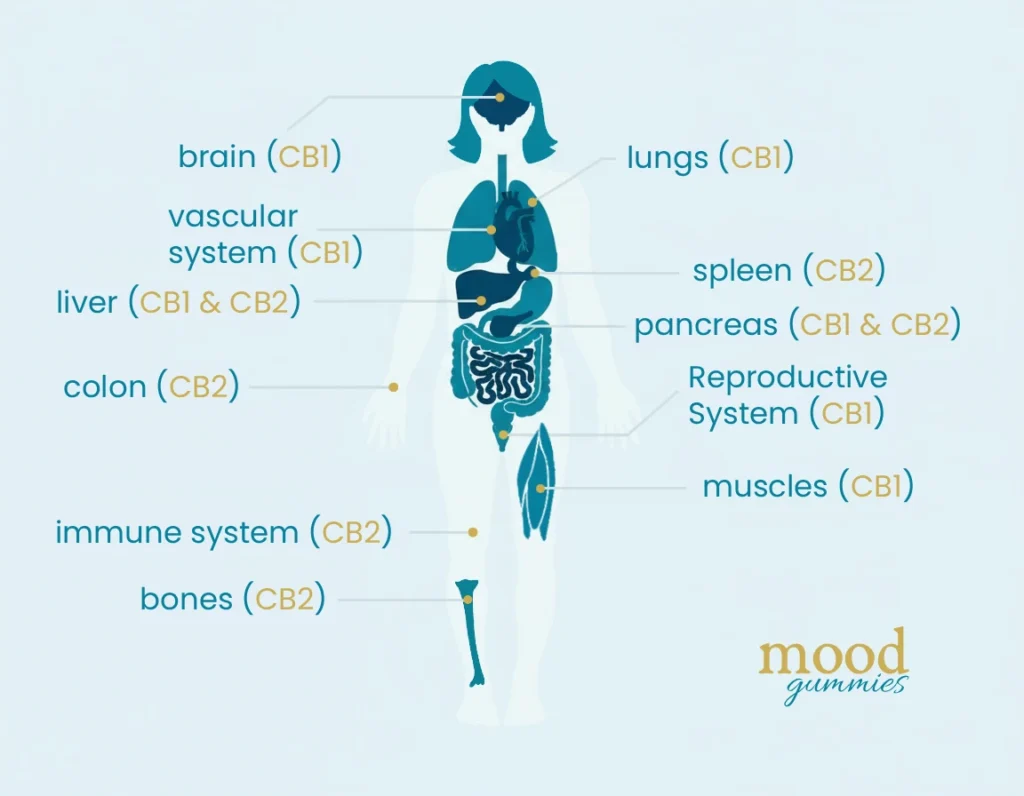
CB1 receptors are concentrated in your brain and central nervous system, influencing mood, memory, and cognitive function.
CB2 receptors are predominantly found in immune cells throughout your body, supporting inflammatory balance and immune response.
This receptor distribution explains why ECS support can address so many different wellness goals simultaneously.
How Abundant Are Your Body’s Natural Endocannabinoids?
Your body produces two primary endocannabinoids: 2-AG and anandamide. A critical distinction emerges from recent research: 2-AG is dramatically more abundant than previously understood.
Early measurements suggested 2-AG was produced at levels 1,000 times higher than anandamide in the brain. However, more precise 2016 research using microwave fixation techniques to prevent postmortem enzyme degradation revealed the true basal brain concentration: approximately 92 nanograms per gram of wet weight tissue.
This distinction matters scientifically because 2-AG is the major cannabinoid type 1 receptor agonist in your brain. Additionally, 2-AG exhibits remarkable on-demand release properties, transported via extracellular microvesicles containing approximately 2,000 2-AG molecules per vesicle, released in response to neuronal activity.
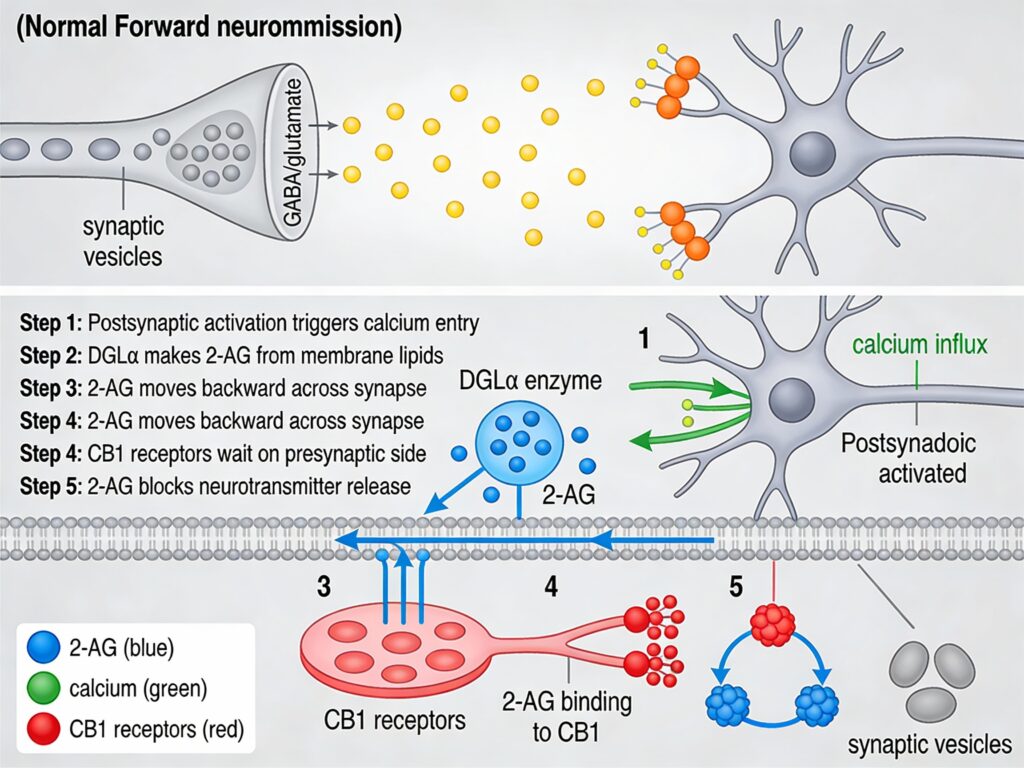
Retrograde signaling shows exactly how this works: 2-AG travels “backwards” from the postsynaptic neuron to CB1 receptors on the presynaptic neuron to restore balance and maintain homeostasis.
This means 2-AG is not stored and released like classical neurotransmitters. Instead, your brain produces 2-AG precisely when and where it’s needed, providing targeted cellular signaling for mood, memory, and stress response.
How Individual Cannabinoids Support Wellness

Does CBD Work Like a Drug?
When you introduce hemp-derived cannabinoids, you are not replacing your body’s natural system. Instead, you are providing supportive compounds that work alongside it.
Each cannabinoid interacts with the ECS in distinct ways. Understanding these differences helps you choose products aligned with your specific needs.
What Does CBD Do in Your Body?
CBD promotes balance without binding strongly to CB1 receptors. Instead, it enhances your body’s own endocannabinoid activity, making your natural calming mechanisms more effective.
The practical result: mental clarity and reduced racing thoughts without sedation. One rigorous 2022 Nature clinical trial documented that participants receiving a high-CBD formulation experienced significant reduction in racing thoughts and nervous tension within four weeks.
CBD works best for:
- Racing thoughts and mental chatter
- Sustained calm throughout the day
- Stress resilience
- General wellness support
What Is CBN and How Does It Support Sleep?
CBN specifically signals rest to your body. Rather than forcing sleep like pharmaceuticals do, CBN works with your ECS to help your body recognize that rest is the natural response.
This is why CBN-containing products are so effective for sleep support. The most rigorous evidence comes from a 2024 randomized, double-blind, placebo-controlled trial published in Pharmaceuticals involving 1,020 participants (206 per dosage arm, plus 204 placebo).
Key findings:
- 25 mg CBN: Significant sleep improvement vs. placebo (p = 0.030)
- 50 mg CBN: Significant sleep improvement vs. placebo (p = 0.018)
- 100 mg CBN: Significant sleep improvement vs. placebo (p = 0.023)
- All CBN doses were comparable to 4 mg melatonin in effectiveness

Importantly, the study measured sleep using the standardized PROMIS Sleep Disturbance 8A scale, which assesses sleep quality in the past 7 days. All side effects were mild, with no significant differences compared to placebo.
CBN does not create grogginess the next morning. Instead, it supports natural sleep architecture by working with your body’s circadian mechanisms rather than forcing artificial sedation.
How Does CBG Enhance Other Cannabinoids?
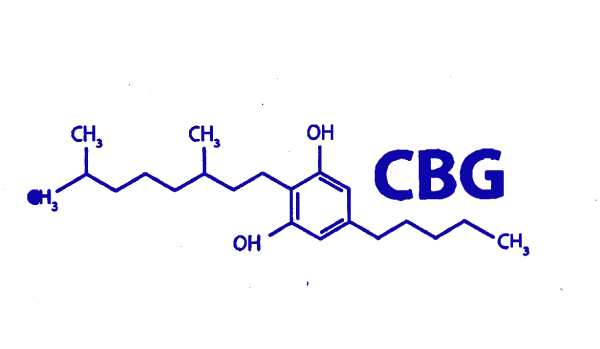
CBG operates as the supporting actor in the cannabinoid ensemble. Sometimes called the “mother cannabinoid” because other cannabinoids are derived from it during plant growth, CBG enhances the function of other compounds while supporting neurological clarity and focus.
This is why many full-spectrum formulations include CBG as a foundational compound that amplifies the effects of other cannabinoids.
What Is THCV and Why Is It Different From THC?
THCV takes a different approach entirely. Unlike THC, which creates euphoria by strongly activating CB1 receptors, THCV engages different pathways to promote alertness and mental clarity.
Research published in Diabetes Care has explored THCV’s potential for supporting healthy metabolic function and sustained energy without the intoxicating effects of THC.

How Does CBC Support Overall Wellness?
CBC rounds out the spectrum with unique anti-inflammatory properties. Recent clinical data demonstrates the power of cannabinoid combinations. A landmark 2024 clinical trial involving over 1,600 participants demonstrated that products combining CBD with CBC produced clinically meaningful improvements:

- Pain management
- Anxiety reduction
- Quality of life improvement
The 40 mg CBD plus 20 mg CBC combination showed particular effectiveness for moderate pain support and anxiety relief.
What Is the Entourage Effect?
Who Discovered the Entourage Effect?
The most important breakthrough in cannabinoid science emerged in 1998 when renowned Israeli biochemist Raphael Mechoulam and his research team introduced the concept of the “entourage effect”.
Their observation was elegant but profound: cannabinoids and plant compounds work together in ways that produce effects far greater than any single compound could achieve alone.
Does the Entourage Effect Really Work?
Yes. Modern research has validated this concept extensively. Studies consistently demonstrate that full-spectrum cannabis extracts outperform isolated cannabinoids in supporting wellness outcomes.
One key finding stands out: CBD isolate demonstrates a bell-curve dose-response pattern (maximum effectiveness at a specific dose, with diminishing results at higher doses). In contrast, full-spectrum extracts maintain steady effectiveness across varying dose ranges.
This difference suggests genuine synergistic interaction rather than simple addition of effects.



From Single Bloom to Full Bouquet
Hover to see how isolates, broad-spectrum, and full-spectrum unlock increasingly powerful entourage effects.
How Do Terpenes Enhance Cannabinoids?
Terpenes are the aromatic compounds responsible for hemp’s distinctive scent. They are not merely pleasant fragrance. They are active pharmaceutical compounds.
Research shows that terpenes bind directly to CB1 receptors with activation levels ranging from 10 to 50% of what cannabinoids alone produce. More remarkably, when combined with cannabinoids, certain terpenes create multiplicative effects.
Which Terpenes Create the Strongest Synergy?
The most compelling evidence involves limonene, a terpene abundant in citrus-scented cannabis strains.
Limonene increases CB1 receptor activity by more than threefold compared to cannabinoids alone. This is not marginal improvement. A threefold enhancement represents a fundamental shift in therapeutic potential.
This finding comes from a 2024 Bazelet scientific whitepaper examining terpene-cannabinoid synergy mechanisms in medical cannabis formulations.
Other terpenes showing similar synergistic amplification include:
- Linalool (floral terpene with anxiety-reducing properties)
- Myrcene (herbal terpene with pain-modulating effects)
- Beta-caryophyllene (spicy terpene that binds CB2 receptors)
- Pinene (woody terpene with anti-inflammatory activity)
Why Do Natural Plant Ratios Matter?
The terpene-to-cannabinoid ratios that produce the strongest synergistic effects mirror those found naturally in the cannabis plant.
This suggests that plant evolution has optimized these combinations over millennia. Nature’s formulations are not random. They represent millions of years of biological refinement for maximum efficacy.
How Synergy Creates Superior Wellness
What Is the Mechanism Behind Entourage Effect?
The mechanism underlying entourage effect is sophisticated. Each cannabinoid and terpene interacts with multiple targets in your body.
When taken individually: A compound activates specific pathways.
When combined: Cannabinoids and terpenes activate different receptors and signaling pathways simultaneously, creating comprehensive support that addresses your wellness from multiple angles rather than single-target intervention.
How Do Terpenes Improve Absorption?
Additionally, terpenes enhance the bioavailability of cannabinoids, meaning your body absorbs and utilizes more of each compound.
Improved bioavailability translates directly to:
- Faster onset of effects
- Stronger wellness support
- Longer-lasting results
This is not a trivial advantage. It represents a measurable improvement in efficacy that explains why full-spectrum formulations often outperform isolated cannabinoids in clinical trials.
What’s a Practical Example of Synergy in Action?

Consider a practical example: CBD plus CBN for sleep support.
- CBD calms mental activity and reduces racing thoughts
- CBN specifically signals your body’s sleep mechanisms (as demonstrated in the 2024 trial at 25-100 mg doses)
- Together, they support faster sleep onset, deeper sleep, and improved morning alertness
The combined effect exceeds what either compound could accomplish alone. This is entourage effect in action.
Full-Spectrum vs. Tailored Formulations
Is Full-Spectrum Always the Best Option?
The emerging nuance in cannabinoid science is this: while the entourage effect is real and powerful, not all effects in full-spectrum extracts are beneficial for every person.
Some cannabinoids and terpenes can counteract desired effects. Different conditions may benefit from different ratios.
When Should You Choose Tailored Formulations?
Leading cannabinoid researchers acknowledge that tailored cannabinoid formulations are far more effective and consistent than uncontrolled full-spectrum consumption.
This does not diminish the entourage effect. Instead, it recognizes that scientific understanding of cannabinoid interactions now permits intentional, targeted synergy:
- Select specific combinations for specific purposes
- Rather than hoping an unrefined full-spectrum product covers your needs
- Optimize for your particular wellness goals
How Do You Choose Between Full-Spectrum and Tailored?
Your best wellness approach depends on your specific goals:
General wellness benefits from full-spectrum formulations capturing broad plant synergy.
Targeted support (sleep, focus, or pain management) benefits from strategically formulated blends where the most effective cannabinoid-terpene combinations are optimized for your need. The 2024 CBN sleep trial demonstrates this principle: a simple formulation with CBN alone at specific dosages (25-100 mg) proved highly effective, suggesting that targeted simplicity can outperform complex full-spectrum blends for specific outcomes.
Understanding this distinction helps you make informed decisions aligned with your specific wellness priorities.
**Not sure which formulation is right for you?**
Take our 30-second quiz to discover the best cannabinoid blend for your wellness goals.
Find Your Mood Match
Science-backed CBD blends tailored to how you want to feel
What do you need support with today?
Pick the one that feels most true today:
When does this bother you most?
How do you prefer to manage this?
Is physical tension keeping you awake?
What kind of sleep support works best for you?
Both support deep rest. One offers gentle, natural calm. The other provides powerful sedation for those seeking complete surrender to sleep.
What kind of tension relief works best for you?
Both support physical relaxation. One offers gentle muscle support. The other provides deeper relief with psychoactive effects for those in a safe environment.
What kind of support sounds best?
Why Product Quality and Consistency Matter
Does Cannabinoid Ratio Actually Affect Results?
Yes. Because synergistic effects depend critically on the ratios between cannabinoids and terpenes, product quality and consistency are not marketing concepts.
They are scientific requirements.
What Happens With Inconsistent Products?
Variation in cannabinoid and terpene profiles across products means variation in effects.
Research-backed formulations from reputable sources ensure you experience the synergistic benefits you expect. Quality matters because synergy depends on precision. The 2024 CBN sleep trial demonstrates this principle: strictly controlled dosages (25 mg, 50 mg, 100 mg) each showed statistically significant improvements, whereas uncontrolled combinations often show inconsistent results.
Learn Center Navigation
Fundamentals
Wellness Benefits
Practices & Lifestyle
Trust & Quality
Blog & Resources